New to BTY? Try our New Student Special

New to BTY? Try our New Student Special

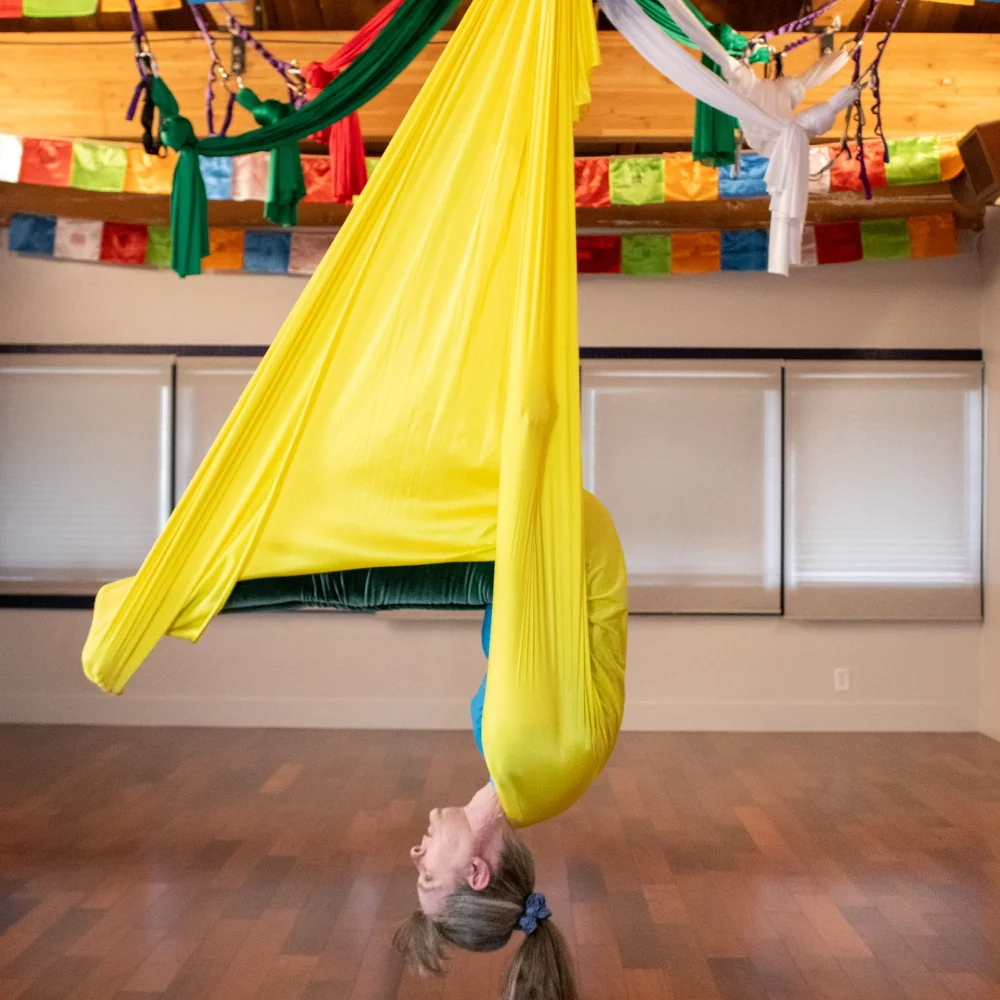
Aerial yoga is well known for the physical benefits it offers. The hammock is a prop that can provide simultaneous traction and compression, allowing the spine to lengthen gently while also initiating myofascial release. The benefits of aerial yoga, however, extend well beyond the physical. There are many ways in which the hammock supports deep and healthy breathing. Lying extended in the hammock you can breathe into the fabric all along the length of your ribcage. During active practice, placing the hammock behind lower ribs allows you to lift and open your chest, a counterpose to practically any daily activity of our modern lives. People sometimes try aerial yoga because they are interested in facing their own fear of being off the ground, and indeed, aerial yoga can reveal an inner strength and resilience that students never knew they had. The swaying of the hammock stills our thoughts, and in the cocoon of the hammock we can fully rest and connect with our deep inner core. Aerial yoga truly addresses the many layers of our being.
Aerial yoga has evolved over time from ancient yogic practices with ropes, many of which can be seen in illustrations to the Hatha Yoga Pradipika as well as art works from previous centuries. B.K.S. Iyengar used slings hung from the walls as props to support inversions and various other poses. Moving from the wall to the open space of the ceiling, expanding from ropes and slings into the hammock, many aerial yoga practices have been heavily influenced by the circus art of aerial silks. Consequently, it is not unusual for aerial yoga classes to focus heavily on physical practice, favoring dramatic poses and flows at the expense of its aspect as yoga. The JOY training is primarily a yoga training, and considers aerial yoga both as a practice in its own right, and as a powerful and playful complement to the practice we experience on the ground.
This training is meant to allow the applicant time to integrate course material, to develop their practice as they develop their teaching skill. Because aerial yoga is a specialized form of yoga, it’s important to spend time finding your own relationship to the hammock , deepening the experience you will drawn on as you support your students. This certification program contains elements of study, practice, mentorship, and teaching to provide a well-rounded and in-depth experience.
You will:
To teach aerial well, it is important to have meaningful experience with the practice. Therefore, this certification includes class attendance and observation in addition to work on constructing sequences and teaching them. To successfully complete this program, a student will:
After all the components have been finished, the student will submit a completed checklist to the JOY program manager.
The heart of the aerial certification is 4 weekend intensives. There are two core weekends, and two elective weekends. Each student will take both of the core intensives, and choose one of the electives. Each elective will dive into a specific aspect of teaching aerial.
This website uses cookies to ensure you get the best experience on our website. Read our Privacy Policy.
After just one aerial class (actually within the first five minutes of that class) Sarah fell in love with aerial yoga. The deep stretching, the core work, the balance development, the gradual improvement in upper body strength, and most of all the inversions, became an essential complement to an active mat practice. Since that first class in 2013, Sarah has completed certifications in Aerial Yoga and Gentle Aerial Yoga through The Yoga Studio in Campbell, as well as certifications in Aerial Yoga and Low Hammock Aerial Yoga with Trilogy Sanctuary in San Diego. She began teaching Aerial Yoga at Breathe Together in 2021, first Aerial Yin, and then adding Aerial Basics shortly afterwards. Always interested in underlying theories and principles of practice, she developed the aerial intensive weekend in 2023 in order to provide a deeper experience to interested students. She also teaches a series of four workshops every year that look at seasonal yoga practices in an aerial context. Her classes stress the relationship between aerial yoga and the mat practice, and use the hammock to explore poses in ways that are unique to the aerial practice.